
Quantum commercialisation: A review of the UK funding landscape
The excellent techUK report, “Quantum commercialisation: Positioning the UK for success” is now two years old. Much has happened since its publication, not least the launch of the UK Quantum Strategy in March 2023 and the announcement of £2.5B to continue with the next ten-year phase of the UK’s National Quantum Technologies Programme.
In her Ministerial Foreword in the National Quantum Strategy, the Secretary of State, The Rt Hon Michelle Donelan MP, noted that the UK was already in a position of strength and, “…we are determined to build on these strengths with vision and long-term funding certainty.”
Work is now underway to define the definition of and plan the delivery of the five Quantum Missions announced by the government in December 2023.
We are clearly building on our strengths but what evidence do we have of past success? We have many metrics. The Quantum Challenge in Innovate UK has now funded 207 projects with £227M and in doing so supported 157 businesses. These businesses have in turn raised over £610M of private investment. The details mask the real success: an industrial sector has been established.
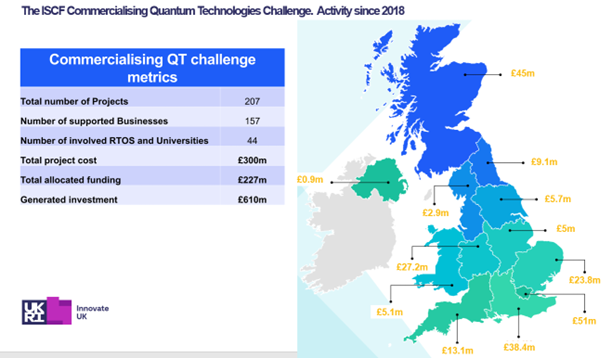
Now, we need to start thinking “sector” not just “technology.” It is right that we should enthuse and want to “leverage the UK's strengths across emerging technologies to push forward the application and commercialisation, highlighting best practice on industry and government collaboration that is enabling success.” The words are from techUK’s “Unleashing Innovation 2024: Call for contributions” and they are good words. Infant technologies – be they critical, emerging, deep or “quantum” – need the watchful eyes of our universities, government, trade associations, learned societies and professional institutions. They are critical component parts of the ecosystem.
The needs of established companies can seem rather dull in comparison. Of course, they still need skills, talent and friendly regulations. They also need money.
We, rightly, look upon the £610M of private investment raised by this emerging sector as a success but it also reflects an urgent need. What was needed over the past six years will be needed once again over the next three! That is what growth means. Bigger sectors need more funding.
This is not easy. There is a breakpoint here. Raising £50M is a vastly different beast from raising £5M. If the UK is to be the go-to place for quantum companies we need to create new mechanisms to ensure that the financial needs of our companies can be met. The story spreads wider than grant funding. Long-term patient capital is needed. If we get this right, we will see Innovate UK, the British Business Bank and British Patient Capital (to give some examples) working more closely and in innovative ways.
Most importantly, our companies are growing because they are finding new market opportunities as well growing existing ones. They will find the skills they need, the friendly business climate they need, the suppliers they need and the investment they need. If they cannot find what they need in the UK, they will go elsewhere.
Confidence is growing. Sentences which used to start “if quantum” now start “when quantum.” The question now is “where quantum?”
techUK – Unleashing UK Tech and Innovation
The UK is home to emerging technologies that have the power to revolutionise entire industries. From quantum to semiconductors; from gaming to the New Space Economy, they all have the unique opportunity to help prepare for what comes next.
techUK members lead the development of these technologies. Together we are working with Government and other stakeholders to address tech innovation priorities and build an innovation ecosystem that will benefit people, society, economy and the planet - and unleash the UK as a global leader in tech and innovation.
For more information, or to get in touch, please visit our Innovation Hub and click ‘contact us’.
Latest news and insights















Other forms of content
Sprint Campaigns
techUK's sprint campaigns explore how emerging and transformative technologies are developed, applied and commercialised across the UK's innovation ecosystem.
Activity includes workshops, roundtables, panel discussions, networking sessions, Summits, and flagship reports (setting out recommendations for Government and industry).
Each campaign runs for 4-6 months and features regular collaborations with programmes across techUK.
techUK's latest sprint campaign is on Robotics & Automation technologies. Find out how to get involved by clicking here.
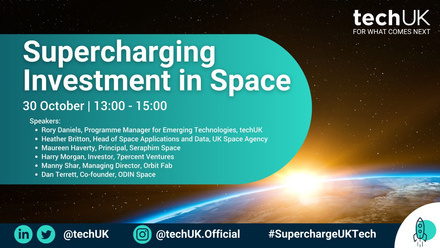
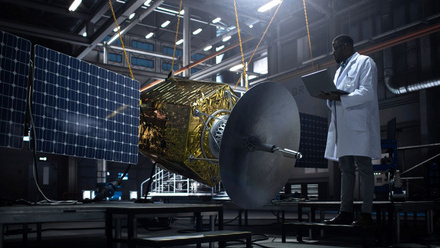
Running from September to December 2023, this sprint campaign explored how the UK can lead on the development, application and commercialisation of space technologies, bring more non-space companies into the sector, and ultimately realise the benefits of the New Space Economy.
These technologies include AI, quantum, lasers, robotics & automation, advanced propulsion and materials, and semiconductors.
Activity has taken the form of roundtables, panel discussions, networking sessions, Summits, thought leadership pieces, policy recommendations, and a report. The report, containing member case studies and policy recommendations, was launched in March 2024 at Satellite Applications Catapult's Harwell campus.
Get in touch below to find out more about techUK's ongoing work in this area.
Event round-ups

Report
Insights

Get in touch

Rory Daniels
Rory Daniels
Rory joined techUK in June 2023 after three years in the Civil Service on its Fast Stream leadership development programme.
During this time, Rory worked on the Government's response to Covid-19 (NHS Test & Trace), school funding strategy (Department for Education) and international climate and nature policy (Cabinet Office). He also tackled the social care crisis whilst on secondment to techUK's Health and Social Care programme in 2022.
Before this, Rory worked in the House of Commons and House of Lords alongside completing degrees in Political Economy and Global Politics.
Today, Rory leads techUK's Emerging Technology and Innovation activity, working with many of the UK's most innovative tech companies to convene key stakeholders, work through key challenges and opportunities for industry, showcase best practice, and shape Government's thinking around future technologies, sectors and industries.
Focus areas include Robotics, Immersive, Web3, Metaverse, Photonics, Space, Gaming, Creative, Innovation policy, university spin-outs, and Futures & Horizon Scanning.
- Email:
- [email protected]
- LinkedIn:
- https://www.linkedin.com/in/rorydaniels28/
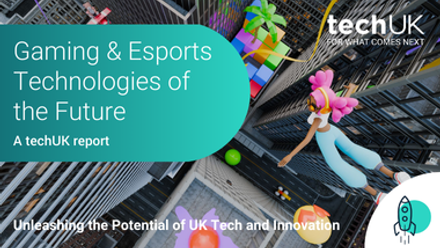
Running from January to May 2024, this sprint campaign explored how the UK can lead on the development, application and commercialisation of the technologies set to underpin the Gaming & Esports sector of the future.
These include AI, augmented / virtual / mixed / extended reality, haptics, cloud & edge computing, semiconductors, and advanced connectivity (5/6G).
Activity took the form of roundtables, panel discussions, networking sessions, Summits, and thought leadership pieces. A report featuring member case studies and policy recommendations was launched at The National Videogame Museum in November 2024.
Get in touch below to find out more about techUK's future plans in this space.
Report
Event round-ups




Insights


Get in touch
Rory Daniels
Rory Daniels
Rory joined techUK in June 2023 after three years in the Civil Service on its Fast Stream leadership development programme.
During this time, Rory worked on the Government's response to Covid-19 (NHS Test & Trace), school funding strategy (Department for Education) and international climate and nature policy (Cabinet Office). He also tackled the social care crisis whilst on secondment to techUK's Health and Social Care programme in 2022.
Before this, Rory worked in the House of Commons and House of Lords alongside completing degrees in Political Economy and Global Politics.
Today, Rory leads techUK's Emerging Technology and Innovation activity, working with many of the UK's most innovative tech companies to convene key stakeholders, work through key challenges and opportunities for industry, showcase best practice, and shape Government's thinking around future technologies, sectors and industries.
Focus areas include Robotics, Immersive, Web3, Metaverse, Photonics, Space, Gaming, Creative, Innovation policy, university spin-outs, and Futures & Horizon Scanning.
- Email:
- [email protected]
- LinkedIn:
- https://www.linkedin.com/in/rorydaniels28/
Running from July to December 2024, this sprint campaign explored how the UK can lead on the development, application and commercialisation of web3 and immersive technologies.
These include blockchain, smart contracts, digital assets, augmented / virtual / mixed / extended reality, spatial computing, haptics and holograms.
Activity took the form of roundtables, workshops, panel discussions, networking sessions, tech demos, Summits, thought leadership pieces, policy recommendations, and a report (to be launched in 2025).
Get in touch below to find out more about techUK's future plans in this space.
Event round-ups




Insights

Get in touch
Rory Daniels
Rory Daniels
Rory joined techUK in June 2023 after three years in the Civil Service on its Fast Stream leadership development programme.
During this time, Rory worked on the Government's response to Covid-19 (NHS Test & Trace), school funding strategy (Department for Education) and international climate and nature policy (Cabinet Office). He also tackled the social care crisis whilst on secondment to techUK's Health and Social Care programme in 2022.
Before this, Rory worked in the House of Commons and House of Lords alongside completing degrees in Political Economy and Global Politics.
Today, Rory leads techUK's Emerging Technology and Innovation activity, working with many of the UK's most innovative tech companies to convene key stakeholders, work through key challenges and opportunities for industry, showcase best practice, and shape Government's thinking around future technologies, sectors and industries.
Focus areas include Robotics, Immersive, Web3, Metaverse, Photonics, Space, Gaming, Creative, Innovation policy, university spin-outs, and Futures & Horizon Scanning.
- Email:
- [email protected]
- LinkedIn:
- https://www.linkedin.com/in/rorydaniels28/
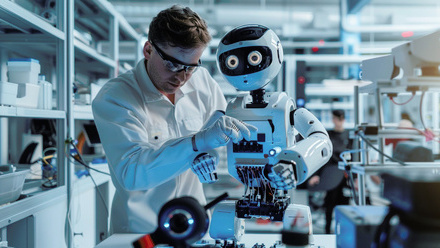
Running from February to June 2025, this sprint campaign is exploring how the UK can lead on the development, application and commercialisation of robotic & automation technologies.
These include autonomous vehicles, drones, humanoids, and applications across industry & manufacturing, defence, transport & mobility, logistics, and more.
Activity is taking the form of roundtables, workshops, panel discussions, networking sessions, tech demos, Summits, thought leadership pieces, policy recommendations, and a report (to be launched in Q4 2025).
Get in touch below to get involved or find out more about techUK's future plans in this space.
Upcoming events


Insights











Event round-ups
Get in touch
Rory Daniels
Rory Daniels
Rory joined techUK in June 2023 after three years in the Civil Service on its Fast Stream leadership development programme.
During this time, Rory worked on the Government's response to Covid-19 (NHS Test & Trace), school funding strategy (Department for Education) and international climate and nature policy (Cabinet Office). He also tackled the social care crisis whilst on secondment to techUK's Health and Social Care programme in 2022.
Before this, Rory worked in the House of Commons and House of Lords alongside completing degrees in Political Economy and Global Politics.
Today, Rory leads techUK's Emerging Technology and Innovation activity, working with many of the UK's most innovative tech companies to convene key stakeholders, work through key challenges and opportunities for industry, showcase best practice, and shape Government's thinking around future technologies, sectors and industries.
Focus areas include Robotics, Immersive, Web3, Metaverse, Photonics, Space, Gaming, Creative, Innovation policy, university spin-outs, and Futures & Horizon Scanning.
- Email:
- [email protected]
- LinkedIn:
- https://www.linkedin.com/in/rorydaniels28/
Campaign Weeks
Our annual Campaign Weeks enable techUK members to explore how the UK can lead on the development and application of emerging and transformative technologies.
Members do this by contributing blogs or vlogs, speaking at events, and highlighting examples of best practice within the UK's tech sector.

Summits
Tech and Innovation Summit 2025
Tech and Innovation Summit 2023
Tech and Innovation Summit 2024
Receive our Tech and Innovation insights
Sign-up to get the latest updates and opportunities across Technology and Innovation.

Rory Daniels
Rory joined techUK in June 2023 after three years in the Civil Service on its Fast Stream leadership development programme.

Tess Buckley
Tess is a digital ethicist and musician. After completing a MA in AI and Philosophy, with a focus on ableism in biotechnologies, she worked as an AI Ethics Analyst with a dataset on corporate digital responsibility (paid for by investors that wanted to understand their portfolio risks). Tess then supported the development of a specialised model for sustainability disclosure requests. Currently, at techUK, her north star as programme manager in digital ethics and AI safety is demystifying, and operationalising ethics through assurance mechanisms and standards. Outside of Tess's work, her primary research interests are in AI music systems, AI fluency and tech by/for differently abled folks.

Sue Daley OBE
Sue leads techUK's Technology and Innovation work. This includes work programmes on AI, Cloud, Data, Quantum, Semiconductors, Digital ID and Digital ethics as well as emerging and transformative technologies and innovation policy. In 2025, Sue was honoured with an Order of the British Empire (OBE) for services to the Technology Industry in the New Year Honours List. She has also been recognised as one of the most influential people in UK tech by Computer Weekly's UKtech50 Longlist and was inducted into the Computer Weekly Most Influential Women in UK Tech Hall of Fame.

Elis Thomas
Elis joined techUK in December 2023 as a Programme Manager for Tech and Innovation, focusing on Semiconductors and Digital ID.

Usman Ikhlaq
Usman joined techUK in January 2024 as Programme Manager for Artificial Intelligence.

Harriet Allen